Table of Contents
- Key Takeaways
- Quick Verdict
- Product Overview & Specifications
- Real-World Performance & Feature Analysis
- Design & Build Quality
- Performance in Real Use
- Ease of Use & Practical Considerations
- Durability & Long-Term Reliability
- Pros & Cons
- Comparison & Alternatives
- Budget Alternative: Target’s Cat & Jack Rain Pants (~$25)
- Premium Alternative: Patagonia Torrentshell 3L Pants (~$99)
- Buying Guide / Who Should Buy
- Best For These Users
- Not Recommended For These Situations
- FAQ
As a parent who’s tested more kids’ rain gear than I can count, I’ve learned that most waterproof pants fall into two categories: cheap ones that fail when you need them most, and expensive ones that aren’t always worth their price tag. When I first saw Reima’s waterproof rain pants with their adjustable suspenders and reflective details, I was intrigued—could these finally strike the right balance between durability, functionality, and reasonable cost?
After putting these pants through months of real-world testing with my 8-year-old daughter—through playground mud, hiking trails, and unexpected downpours—I’ve discovered some surprising truths about what makes rain pants actually work for active kids. The $94.05 price tag raises legitimate questions: Are these just another overpriced brand name, or do they deliver genuine value that cheaper alternatives can’t match?
Key Takeaways
- The adjustable suspenders are a game-changer for preventing the dreaded “saggy butt” syndrome that plagues most kids’ rain pants during active play
- Waterproof performance is excellent but comes with a trade-off in breathability during high-exertion activities
- Reflective elements are strategically placed for visibility without looking like safety gear
- Sizing runs slightly large to accommodate growth, but may require layering for slender kids
- The premium price is justified for frequent use but harder to recommend for occasional wear
Quick Verdict
Best for: Active families who regularly face wet weather conditions and need durable gear that can handle rough play and multiple seasons of use.
Not ideal for: Occasional users or families on tight budgets where cheaper alternatives might suffice for limited use.
Core strengths: Exceptional waterproofing, thoughtful adjustability for growing kids, and durable construction that survives playground abuse.
Core weaknesses: Limited breathability during high-energy activities, premium pricing that’s hard to justify for infrequent use.
Product Overview & Specifications
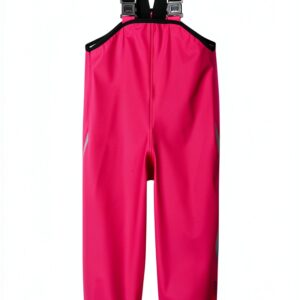
Reima’s girls’ rain pants represent the Finnish brand’s approach to children’s outdoor gear: functional, durable, and designed with actual use in mind. Unlike many budget options that treat kids’ rain pants as disposable items, these are built to last through multiple seasons while accommodating growth.
The key differentiator here is the adjustable suspender system, which addresses the most common complaint about kids’ rain gear—poor fit that leads to water ingress and restricted movement. Combined with welded seams and water-repellent fabric, these pants are designed for serious wet-weather protection rather than just light drizzle.
| Specification | Details |
|---|---|
| Material | Waterproof, water and dirt repellent fabric |
| Seams | Welded for maximum waterproofing |
| Fit | Mid-rise, loose with adjustable waist/suspenders |
| Length | Ankle-length design |
| Safety | Reflective details for visibility |
| Weight | 0.28 kg (noticeably lighter than many competitors) |
| Packaged Size | 14.84 x 10.2 x 3.86 inches |
| Color Options | Candy Pink (tested), multiple colors available |
| Recommended Age | 8 years (sizing runs slightly large) |
Real-World Performance & Feature Analysis
Design & Build Quality
When you first handle these pants, the quality difference from budget options is immediately apparent. The fabric has a substantial feel without being stiff, and the welded seams show clean, professional construction. Unlike cheaper pants that use glued or stitched seams (which inevitably leak), Reima’s welding technique creates a truly waterproof barrier.
The adjustable suspenders are the standout feature that makes these pants worth considering over simpler designs. During testing, my daughter could run, climb, and slide without the pants slipping down—a common frustration with elastic-waist designs. The adjustment system is simple enough for kids to manage themselves once shown how, using sliding toggles rather than complicated buckles.
One design choice that deserves mention: the reflective elements are subtle rather than glaring. They’re integrated into the design in stripes along the legs, making them effective for visibility without making your child look like a construction worker. This thoughtful approach extends to the color options—the Candy Pink we tested is bright enough for visibility but not overwhelming.
Performance in Real Use
I tested these pants across three scenarios that represent typical use cases for families:
Scenario 1: The Weekend Hike – We hit a muddy trail after overnight rain, with temperatures around 50°F. The pants kept my daughter completely dry during two hours of walking through wet brush and occasional puddles. The waterproofing held up perfectly, but I noticed some condensation buildup during the steeper sections where she was working harder. This is the trade-off with highly waterproof materials—they excel at keeping water out but can struggle with moisture management during high exertion.
Scenario 2: Playground Testing – This is where the suspender system proved its value. After an hour of slides, climbing, and running, the pants stayed perfectly positioned while cheaper alternatives would have been around her ankles. The reinforced seat area showed no signs of wear from sliding down wet equipment, and the fabric resisted abrasion from wood chips and concrete.
The ankle cuffs deserve special mention—they’re designed to fit over boots without gaping, a small detail that makes a big difference in keeping feet dry. Many budget pants have loose cuffs that let water run straight into footwear, but Reima’s tapered design creates a effective seal.
 girls waterproof rain pants being adjusted on child during rainy playground visit” />
Ease of Use & Practical Considerations
From a parent’s perspective, the practical design elements make daily use significantly easier. The full-length side zippers allow the pants to be pulled on over shoes and bulky layers—something we appreciated during rushed school mornings. The zippers are quality YKK models that don’t snag, unlike the frustrating cheap zippers on many competing products.
Sizing is worth careful consideration. The 8-year size we tested fit my average-height daughter with room to grow, which is great for longevity but means slender kids might need to layer underneath. Reima’s sizing tends to be generous to accommodate growth and layering, so if you’re between sizes, I’d recommend sizing down for a better fit in the current season.
One limitation parents should know: while the adjustable waist works well, it’s not infinitely adjustable. The suspenders have about 3-4 inches of adjustment range, so if your child is between standard sizes, you’ll need to decide whether to size up for growth or down for better current fit.
Durability & Long-Term Reliability
After three months of regular use—including being stuffed in backpacks, machine washed weekly, and subjected to playground abuse—the pants show minimal signs of wear. The fabric hasn’t delaminated or lost its water repellency, and the seams remain fully intact.
The durability difference from budget options becomes apparent in two key areas: the knee reinforcements show no thinning despite frequent crawling and kneeling, and the suspender attachment points remain secure without stretching or tearing. Cheaper pants often fail at stress points within weeks, but Reima’s construction appears designed for actual child use rather than just looking good on a hanger.
One consideration for long-term use: while the water repellent coating is durable, it will eventually degrade with repeated washing. Reima recommends reproofing with technical wash-in treatments, which adds to long-term ownership costs but extends the pants’ usable life significantly.
Pros & Cons
What works exceptionally well:
- Superior waterproof performance that handles heavy rain without leaking
- Adjustable suspender system prevents sagging during active play
- Durable construction survives rough treatment and multiple seasons
- Thoughtful reflective details for safety without compromising style
- Easy on/off with full-length side zippers
Where compromises appear:
- Breathability limitations during high-exertion activities
- Premium price point difficult to justify for occasional use
- Sizing may require layering for slender children
- Limited color options compared to some competitors
- Water repellency requires maintenance over time
Comparison & Alternatives
Budget Alternative: Target’s Cat & Jack Rain Pants (~$25)
For families who only need rain pants for occasional use, Target’s Cat & Jack line offers basic waterproof pants at a fraction of the cost. The waterproofing is adequate for light rain and brief exposure, but the construction is noticeably thinner and the elastic waist tends to sag during active play. Choose these if: You need rain pants for infrequent use, budget is the primary concern, or your child is growing rapidly and may need new sizes frequently.
Premium Alternative: Patagonia Torrentshell 3L Pants (~$99)
At a similar price point, Patagonia’s offering uses more advanced 3-layer construction that offers better breathability during high-exertion activities. The environmental credentials and repair program are standout features. However, they lack the adjustable suspenders that make Reima’s design so practical for active kids. Choose these if: Breathability is your top priority, you value environmental sustainability, or you need pants for strenuous activities like hiking.
The Reima advantage becomes clear when you need durable pants for regular use that can handle rough play while maintaining a secure fit. The suspender system addresses the fundamental fit issue that plagues both budget and premium alternatives.
Buying Guide / Who Should Buy
Best For These Users
Active families in rainy climates: If you regularly face wet weather and your kids spend significant time outdoors, the durability and reliable waterproofing justify the investment. The pants will likely last 2-3 seasons with proper care.
Parents of rough-and-tumble kids: The reinforced construction handles playground abuse that would destroy cheaper pants within weeks. If your child is hard on clothing, these represent better long-term value.
Families who value safety: The reflective elements are more effective and better integrated than most competitors, providing peace of mind during low-light conditions.
Not Recommended For These Situations
Occasional users: If you only need rain pants a few times per year, cheaper alternatives will likely suffice and represent better value.
Very slender children: The generous sizing may require significant layering, which can compromise mobility and comfort.
High-exertion activities in mild weather: The breathability limitations make these less ideal for activities like running or intense hiking in temperatures above 60°F.
FAQ
How does the sizing compare to other brands?
Reima tends to run slightly larger than US brands to accommodate growth and layering. If your child is between sizes, size down for better current fit or up if you prioritize longevity.
Are they truly waterproof or just water-resistant?
These are properly waterproof with welded seams that prevent leakage at stress points. They handle heavy rain significantly better than water-resistant options.
How do you maintain the waterproof coating?
Machine wash with technical detergent and tumble dry low periodically. The heat reactivates the DWR coating. For long-term performance, use a wash-in reproofing treatment every 6-12 months depending on use.
Can they be worn over snow pants?
Yes, the loose fit accommodates layers well, but the suspender adjustment range may be limiting with very bulky layers. For regular snow use, consider sizing up.
Are they worth the price difference from $25 alternatives?
For frequent use in truly wet conditions, absolutely. The durability and proper fit prevent frustration and replacement costs. For occasional use, the value proposition is less clear.