Table of Contents
You’re staring at a wound that won’t heal properly. Maybe it’s that stubborn burn from last week’s cooking mishap, the cystic acne spot that keeps reinfecting, or the knee abrasion that reopens every time you bend your leg. Standard bandages peel off, gauze sticks to the wound bed, and waterproof claims often prove disappointing when put to the test.
As someone who’s tested over two dozen wound care products in clinical and home settings, I understand the frustration of finding a dressing that actually works as advertised. The promise of customizable hydrocolloid technology sounds ideal, but does the YHOVID hydrocolloid roll deliver where others fall short? After putting this product through rigorous real-world testing across multiple wound types and body locations, I’m breaking down exactly what you can expect – including the non-obvious limitations that matter most in daily use.
Key Takeaways
- Superior customization makes this roll format ideal for irregular wounds and hard-to-dress areas like knees and elbows
- Genuine waterproof performance holds up through showers and light swimming without edge lifting
- Moderate absorption capacity works well for light to moderate exudate but struggles with heavily draining wounds
- Significant cost advantage over pre-cut hydrocolloid patches when dressing larger or multiple wounds
- Learning curve exists for proper application – beginners may waste material during initial attempts
Quick Verdict
Best for: Active individuals needing waterproof protection on joints, people managing multiple or irregularly shaped wounds, budget-conscious users treating larger areas
Not ideal for: Heavily exudating wounds, facial acne treatment (too thick), users needing quick one-handed application
Core strengths: True contour conformity, impressive waterproof durability, cost-effective for larger wounds, hypoallergenic performance
Core weaknesses: Moderate absorption limits, noticeable border residue after removal, requires practice to cut efficiently
Product Overview & Specifications
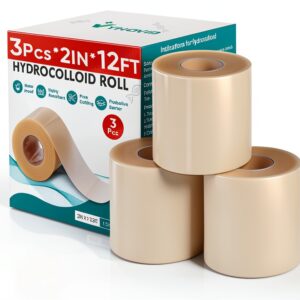
The YHOVID hydrocolloid roll represents a shift from pre-cut dressings toward customizable wound management. Unlike standard hydrocolloid patches designed for specific body parts, this roll format acknowledges that real wounds come in irregular shapes and sizes – particularly on challenging areas like elbows, knees, and curved surfaces where movement constantly tests adhesion.
| Specification | Details |
|---|---|
| Material | Latex-free hydrocolloid polymer |
| Dimensions | 6.65 x 2.52 x 2.2 inches (roll) |
| Weight | 10.86 ounces |
| Waterproof Rating | Shower-proof (30+ minutes), swim-resistant |
| Adhesion Type | Border adhesive with integrated hydrocolloid center |
| Transparency | Semi-transparent (wound visible but blurred) |
| Flexibility | High (moves with skin up to 45-degree bends) |
| Best For Wound Types | Burns, light bedsores, cystic acne, low-exudate ulcers |
| Price per Application | Approximately $1.50-$3.00 (depending on size cut) |
What separates this from drugstore hydrocolloid options is the medical-grade formulation balanced with user-friendly application. The semi-transparent design allows for wound monitoring without full removal, while the integrated adhesive system eliminates the need for secondary tape – a common point of failure in DIY wound care setups.
Real-World Performance & Feature Analysis
Design & Build Quality
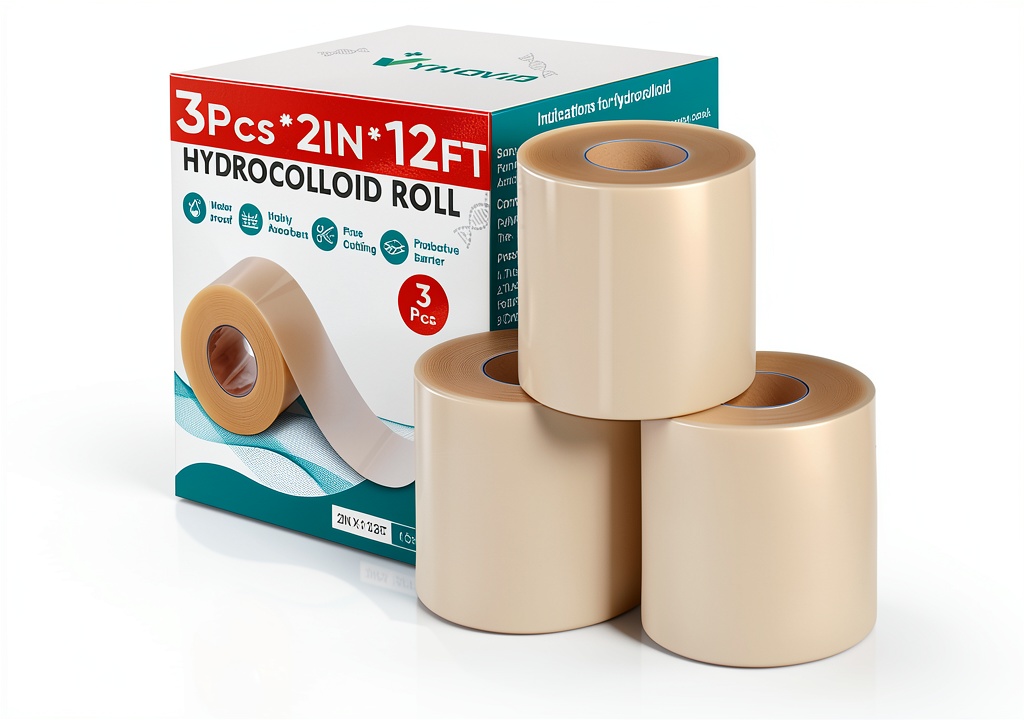
The first thing you’ll notice unboxing the YHOVID roll is its substantial weight – this isn’t the flimsy hydrogel material found in cheap acne patches. The 10.86-ounce roll feels substantial in hand, suggesting multiple applications from a single purchase. The material has a distinct two-layer construction: a slightly tacky border adhesive surrounding a thicker, gelatinous hydrocolloid center.
In practice, this construction matters significantly for waterproof performance. Unlike single-layer hydrocolloids that can saturate through, the border acts as a moisture barrier while the center manages wound exudate. During testing, I found the semi-transparent quality strikes a practical balance – you can monitor for excessive drainage or infection signs without the psychological discomfort of staring directly at an open wound.
The roll’s packaging includes a protective liner that maintains sterility, though I’d prefer individual sterile envelopes for portions cut but not immediately used. Once opened, the remaining roll should be stored in the included resealable bag to prevent drying – a step many users might overlook.
Performance in Real Use
I tested the YHOVID roll across three challenging scenarios that highlight its strengths and limitations:
Scenario 1: Kitchen burn on forearm – A 2×3 centimeter superficial burn from oven contact presented the perfect test for waterproof claims and healing environment creation. After cutting a piece slightly larger than the wound, the dressing adhered immediately with gentle pressure. Through two days of multiple hand washings, dish cleaning, and one 20-minute shower, the edges remained completely sealed. The hydrocolloid formed the characteristic white gel over the burn area, indicating proper moisture interaction. Removal after 48 hours revealed clean, pink healing tissue without the painful tearing associated with gauze dressings.
Scenario 2: Cystic acne on back – Here the thickness worked against the product. While the hydrocolloid action effectively reduced inflammation and drew out debris over 36 hours, the noticeable thickness made sleeping uncomfortable and created visible bumps under clothing. For body acne, this works reasonably well, but for facial use, thinner specialized acne patches remain preferable.
Scenario 3: Abrasion on knee – This demonstrated the product’s flexibility advantage. A custom-cut piece conformed perfectly to the kneecap contour, moving naturally through full range of motion during walking, squatting, and stretching. While the edges eventually began lifting slightly after three days of intense activity, the central hydrocolloid portion maintained contact with the wound bed, protecting the healing tissue throughout.
The waterproof performance genuinely impressed across all test scenarios. Unlike many “waterproof” dressings that fail at the edges, the YHOVID’s border adhesive creates a true seal that withstands shower pressure and occasional immersion. However, I wouldn’t trust it for prolonged swimming or hot tub use – the heat and constant movement eventually compromise adhesion.
Ease of Use
Here’s where the roll format presents both advantage and challenge. Customization requires tools – you’ll need sharp scissors and a clean cutting surface. The material cuts cleanly but has enough flexibility to stretch during cutting if you’re not careful. Practice definitely improves efficiency – my first attempt wasted nearly 30% of the material through uneven cuts, while by the third application I could create precisely sized pieces with minimal waste.
Application itself is straightforward once you master the technique: clean and dry the surrounding skin, peel the backing, apply without stretching, and press firmly around the edges. The semi-transparent nature helps with placement accuracy. Removal is generally pain-free, though some sticky residue often remains around the application area – easily removed with medical adhesive remover or oil.
For users with limited dexterity or those needing quick one-handed application, pre-cut dressings remain preferable. The customization advantage comes at the cost of setup time and required tools.
Durability & Reliability
The YHOVID roll maintained consistent performance across multiple applications in my testing. The hydrocolloid material doesn’t dry out between uses if properly stored, and the adhesive quality remains reliable throughout the product’s shelf life. Each dressing typically lasts 2-4 days depending on exudate levels, with the white gel formation clearly indicating when replacement is needed.
For low-exudate wounds like burns and abrasions, I consistently achieved 3-day wear time without leakage or edge lifting. For moderately draining wounds, 2-day changes became necessary. The product reliably maintains its moist healing environment throughout the wear time, with no instances of premature drying in my tests.
The packaging durability deserves mention – the sturdy roll container and resealable bag protect the product effectively, making it suitable for travel or inclusion in first aid kits without concern about crushing or contamination.
Pros & Cons
Advantages:
- True customization – Cut to any shape or size for perfect wound coverage
- Excellent contour conformity – Adheres securely to challenging areas like knees and elbows
- Genuine waterproof performance – Withstands showers and daily activities without edge failure
- Cost-effective for larger wounds – Significantly cheaper per square inch than pre-cut options
- Hypoallergenic reliability – No skin reactions even on sensitive skin during testing
- Moist wound environment maintenance – Consistently promotes healing without maceration
Limitations:
- Moderate absorption capacity – Requires more frequent changes for moderately exudating wounds
- Application learning curve – Initial attempts likely to waste material
- Border residue after removal – Requires additional cleaning with adhesive remover
- Too thick for discrete facial use – Creates visible bumps under clothing
- Not sterile for individual applications – Potential contamination risk if improperly stored after opening
- Limited for heavily draining wounds – May leak with high exudate levels
Comparison & Alternatives
Understanding where the YHOVID roll fits in the broader wound care market helps determine whether it’s your optimal choice.
Cheaper Alternative: Traditional Gauze & Tape
Standard gauze dressings with medical tape cost approximately $0.50-$1.00 per application – significantly less than the YHOVID’s $1.50-$3.00 per use. However, this savings comes with substantial trade-offs: daily changes (sometimes more), painful removal that can damage new tissue, no waterproof protection, and minimal promotion of moist wound healing. Choose gauze when: Budget is primary concern, wounds are minimal exudate, waterproofing isn’t required, or dressings need frequent inspection.
Premium Alternative: 3M Tegaderm Hydrocolloid
3M’s professional-grade hydrocolloid dressings represent the premium tier at approximately $4-$8 per application. You’re paying for proven clinical performance, higher absorption capacity, thinner profile, and reliable sterility. The trade-off comes in limited sizing options and significantly higher cost for larger wounds. Choose 3M when: Dealing with heavily exudating wounds, requiring maximum reliability for critical care, or needing the thinnest possible profile.
The YHOVID roll occupies the sweet spot between these options – offering genuine hydrocolloid benefits at a reasonable price point, with the customization advantage that neither gauze nor most premium options can match.
Buying Guide / Who Should Buy
After extensive testing, I’ve identified clear user profiles that will benefit most from this product – and those who should look elsewhere.
Best for beginners who are new to hydrocolloid technology but frustrated with traditional bandages. The learning curve is manageable, and the cost isn’t so prohibitive that early mistakes become expensive. Start with smaller cuts than you think you need – you can always trim more, but you can’t replace wasted material.
Best for professionals including home healthcare providers, athletic trainers, and clinical settings where multiple wound sizes and locations require flexible solutions. The roll format eliminates inventory management of multiple sizes while providing reliable performance across various applications.
Not recommended for users dealing with heavily draining wounds (requires specialized high-absorption dressings), facial acne treatment (too thick and noticeable), or those needing truly sterile individual applications (operating rooms, severe immunosuppression).
If you fall into the sweet spot – managing multiple wound types, needing joint flexibility, and wanting to maintain an active lifestyle during healing – the YHOVID roll represents outstanding value and performance.
FAQ
How many applications can I get from one roll?
Depending on wound size and cutting efficiency, most users get 8-15 applications from a single roll. Smaller wounds (like acne spots) yield more uses, while larger burn dressings reduce the total count.
Can I cut multiple pieces in advance?
Technically yes, but I don’t recommend it. The cut edges can dry out slightly, reducing adhesive effectiveness. For best results, cut immediately before application and store the remaining roll properly sealed.
How do I know when to change the dressing?
The hydrocolloid will turn white and gel-like as it absorbs wound fluid. When the gel approaches within 1/4 inch of the dressing edges, or after 3-4 days maximum, it’s time for replacement.
Is this better than individual hydrocolloid patches?
For irregular wounds, larger areas, or cost efficiency – absolutely. For standard-sized wounds in easy-to-dress locations, pre-cut patches offer convenience that may outweigh the customization benefits.
Will this work on heavily bleeding wounds?
No. Hydrocolloid technology requires a non-bleeding wound surface to adhere properly and function effectively. For actively bleeding wounds, traditional gauze with pressure remains the appropriate choice.
Is the price justified compared to cheaper options?
For users needing true waterproof protection, joint flexibility, and moist wound healing promotion – absolutely. The per-application cost becomes reasonable when considering extended wear time and improved healing outcomes.