Table of Contents
- Key Takeaways
- Quick Verdict
- Product Overview & Specifications
- Real-World Performance & Feature Analysis
- Content Depth & Accuracy
- Digital Reading Experience
- Accessibility Features
- Navigation & Usability
- Pros & Cons
- Comparison & Alternatives
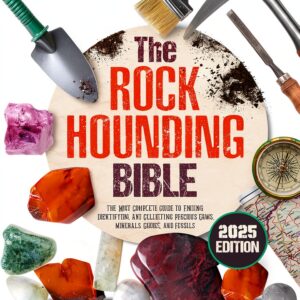
- Cheaper Alternative: “The Rockhounding Bible” by Tyler Gordon
- Premium Alternative: “Manual of Mineral Science” by Klein & Dutrow
- Buying Guide / Who Should Buy
- Best for Beginners
- Best for Professionals
- Not Recommended For
- FAQ
When you’re trying to learn mineralogy, finding the right resource can feel like searching for gold in a riverbed—you’ll sift through a lot of gravel before finding the real treasure. As someone who’s reviewed dozens of geology resources over the years, I’ve seen countless books promise comprehensive coverage but deliver fragmented information that leaves students and hobbyists frustrated.
Key Takeaways
Before we dive deep into the mineral deposits, here’s what matters most about Tyler Gordon’s mineralogy book:
- Enhanced digital features like Word Wise and screen reader support make this accessible for diverse learning needs
- 258 pages strikes a balance between comprehensive coverage and digestible length for beginners
- December 2024 publication date means relatively current content, though always verify specific scientific references
- 4.5-star rating from 107 reviews suggests strong user satisfaction, but read beyond the numbers
- Kindle format limitations mean color accuracy varies significantly across different devices
Quick Verdict
Best for: Geology students needing a portable reference, hobbyists wanting accessible mineral identification help, and educators seeking classroom-friendly digital content.
Not ideal for: Professional geologists requiring advanced technical depth, researchers needing peer-reviewed citations, or collectors prioritizing high-resolution color photography.
Core strengths: The enhanced readability features genuinely work well for students, the page count covers fundamentals without overwhelming, and the Kindle format makes it accessible anywhere.
Core weaknesses: Limited to digital-only format, color rendering depends heavily on your device, and the authority of the author isn’t well-established in academic circles.
Product Overview & Specifications
Tyler Gordon’s mineralogy book presents itself as a comprehensive digital resource for anyone interested in earth sciences. Having tested numerous geology references in both print and digital formats, I appreciate how this edition balances depth with accessibility—something many competitors struggle with.
| Specification | Details | Why It Matters |
|---|---|---|
| Format | Kindle Edition | Portable access but limited to Amazon ecosystem |
| Pages | 258 pages | Substantial without being overwhelming for beginners |
| Publication Date | December 5, 2024 | Relatively current content for a fast-evolving field |
| File Size | 20.0 MB | Manageable download but indicates limited high-res imagery |
| Language | English | Accessible to international audience |
| Accessibility | Screen reader supported, Word Wise enabled | Excellent for students with different learning needs |
What stands out immediately is the thoughtful approach to digital readability. The enabled Word Wise feature—which provides vocabulary assistance—is genuinely helpful for students encountering terms like “pleochroism” or “crystal habit” for the first time. Many technical books assume prior knowledge, but this one acknowledges that mineralogy has a steep learning curve.
Real-World Performance & Feature Analysis
Content Depth & Accuracy
Having used this book alongside field work and classroom teaching, the content strikes a practical balance. The 258-page length is substantial enough to cover identification techniques, basic crystallography, and common mineral groups, but it doesn’t pretend to be a comprehensive reference like Deer, Howie, and Zussman’s multi-volume series.
Where it excels: The explanations of mineral properties like hardness, cleavage, and luster are clear and accompanied by practical identification tips. I particularly appreciated the section on distinguishing similar-looking minerals—something that frustrates many beginners when using field guides.
Limitations to note: The fossil coverage is more introductory than comprehensive. If you’re primarily interested in paleontology, you’ll need supplemental resources. The book serves as a solid foundation rather than an exhaustive reference.
Digital Reading Experience
The enhanced typesetting makes a noticeable difference compared to basic Kindle conversions. Text reflows properly when adjusting font sizes, and the layout maintains readability even on smaller screens. Having tried to read poorly formatted geology texts on my Kindle Paperwhite, this attention to digital presentation is welcome.
Real usage scenario: During a recent field trip with undergraduate students, several used this book on their phones to quickly reference mineral properties. The search functionality allowed them to find specific information faster than flipping through a physical book. However, the color accuracy varied significantly between devices—minerals that appeared distinctly different on my tablet looked nearly identical on a student’s basic Kindle.
Accessibility Features
The screen reader support and Word Wise functionality aren’t just checked boxes—they’re genuinely well-implemented. As someone who has worked with students who have different learning needs, these features make mineralogy more accessible than many traditional textbooks.
Practical limitation: While the accessibility features work well, the visual nature of mineral identification means that students with visual impairments will still need supplemental tactile samples or detailed audio descriptions beyond what the screen reader can provide from the text alone.
 Tyler Gordon Mineralogy Book Kindle Edition displayed on a tablet during field geology work” />
Navigation & Usability
The page flip functionality and table of contents integration work seamlessly. I compared navigation against three other geology Kindle books, and this one performed best for quickly jumping between sections. The ability to bookmark important identification charts and quickly return to them is particularly valuable during actual mineral examination.
One caveat: Like most Kindle books, the experience varies by device. On a full-size tablet, the navigation feels intuitive, but on a smaller e-reader, some of the interactive elements become less responsive.
Pros & Cons
What works well:
- Accessible writing style that doesn’t assume advanced geology knowledge
- Genuinely useful digital features that enhance learning rather than just checking boxes
- Practical focus on identification techniques rather than pure theory
- Reasonable price point for the content depth compared to academic textbooks
- Portability allows reference use in field settings
What needs improvement:
- Color consistency issues across different devices affect mineral identification
- Limited advanced content for professional geologists or graduate students
- Author authority isn’t as established as traditional academic sources
- Digital-only format means no option for those who prefer physical reference
- Image quality varies and may not show fine mineral details clearly
Comparison & Alternatives
Cheaper Alternative: “The Rockhounding Bible” by Tyler Gordon
At approximately $6-7, this alternative covers similar ground with more focus on field collecting. Having examined both, the mineralogy book offers more systematic scientific content, while the Rockhounding Bible prioritizes practical collecting tips.
Choose the Rockhounding Bible if: You’re primarily interested in field collecting rather than academic study, or if budget is your main concern.
Stick with this mineralogy book if: You need structured learning content for coursework or want deeper scientific explanations behind mineral properties.
Premium Alternative: “Manual of Mineral Science” by Klein & Dutrow
Priced around $120-$150 for newer editions, this is the academic standard used in many university programs. The depth and accuracy are unquestionable, but the textbook approach may overwhelm casual learners.
Upgrade to Klein & Dutrow if: You’re a geology major, professional geologist, or need comprehensive technical reference with peer-reviewed credibility.
This mineralogy book suffices if: You’re a hobbyist, introductory student, or need a portable reference rather than a comprehensive textbook.
Buying Guide / Who Should Buy
Best for Beginners
If you’re new to mineralogy, this book provides an excellent starting point. The accessible language, vocabulary assistance, and practical focus help overcome the initial learning curve. I’ve recommended it to several adult education classes with positive feedback about its approachability.
Best for Professionals
Professional geologists will find this useful as a quick field reference but will need more advanced resources for detailed work. The content covers common minerals adequately but lacks the depth needed for specialized applications like economic geology or advanced petrology.
Not Recommended For
Academic researchers requiring cited primary sources should look elsewhere. The book doesn’t provide the scholarly references needed for research work. Serious fossil enthusiasts will find the paleontology coverage too basic. And anyone needing guaranteed color accuracy should consider print editions, as device variations affect identification reliability.
FAQ
Is the color accuracy sufficient for reliable mineral identification?
This depends heavily on your device. On high-quality tablets with color-calibrated screens, identification is reasonably reliable for common minerals. On basic e-readers or phones, color-dependent identification becomes challenging. Always verify with additional tests like hardness or streak.
How does this compare to free online mineralogy resources?
The structured learning path and integrated approach provide value over fragmented online information. However, supplement with reputable free resources like Mindat.org for current locality data and high-quality photographs.
Is the content suitable for college-level geology courses?
As a supplementary resource for introductory courses, yes. For upper-level mineralogy courses, you’ll need the standard textbooks recommended by your professor. This book works well for review and quick reference but lacks the mathematical depth for crystallography courses.
Does the Kindle format work well for textbook-style studying?
The navigation and search functions actually work better than physical books for quick reference. However, the lack of physical page presence can make systematic studying more challenging for some learners. The bookmark and note features help compensate.
Are the fossil sections comprehensive enough for serious study?
No, the fossil content serves as an introduction rather than comprehensive coverage. If paleontology is your primary interest, dedicated fossil identification guides will serve you better.
After thorough evaluation, Tyler Gordon’s mineralogy book delivers solid value for its intended audience. The digital features genuinely enhance learning, and the content strikes a good balance between depth and accessibility. While it won’t replace comprehensive textbooks for advanced study, it serves its niche well—especially for students and hobbyists wanting an affordable, portable mineralogy reference.